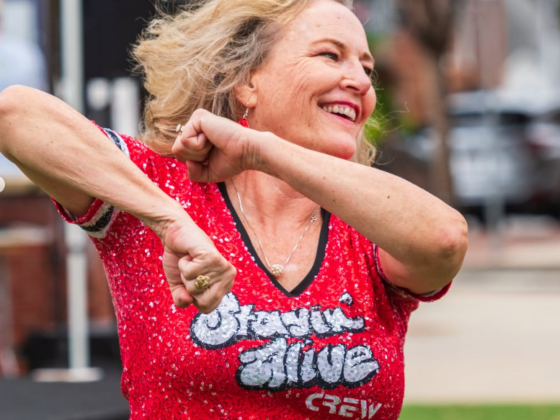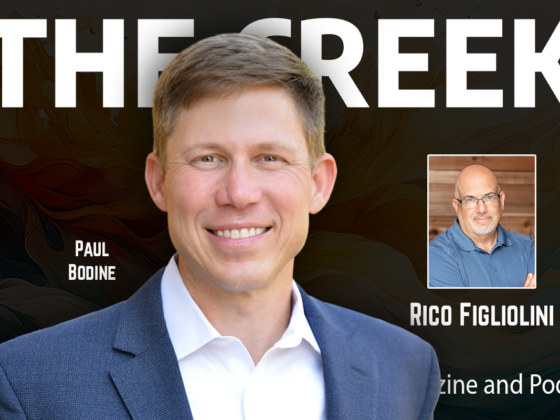
Worximity’s Dua Almgoter joins THE CREEK to talk about her path from industrial engineering in Iraq to Marvel visual effects to smart factories — and why real-time shop-floor data protects workers instead of replacing them.
Dua Almgoter did not take a straight line to manufacturing. Born in Iraq, she studied industrial engineering at her father’s urging rather than the artistic path she wanted, then spent years trying nearly everything else — telecommunications, the United Nations, real estate and pharmaceutical licensing with the FDA — before moving to Canada to work in visual effects on projects for Disney, Marvel and Netflix. What she found there surprised her.
“Doing something related to art not necessarily will bring all your creativity,” she said. “You will be creative doing something you’re good at.”
That realization sent her back toward engineering, and eventually to Worximity, a Montreal company that helps manufacturers convert conventional plants into connected, data-driven operations.
In this episode of THE CREEK, with Rico Figliolini, Dua walks through what a “smart factory” actually means. It’s less about robots on the floor, more about replacing clipboards with real-time visibility into how every machine is running. She explains how that data surfaces downtime, supply bottlenecks, labor gaps and aging equipment before they turn into expensive shutdowns. And why the technology tends to protect shop floor workers rather than replace them: when a system shows exactly why a line ran slow, operators finally have evidence instead of blame.
We also talk about how efficiency looks different in pharmaceuticals than in meat or beauty products, why demonstrating ROI is what finally convinces entrenched management to change, how Worximity is giving clients an AI they can question about their own production data and the growing partnership between Investment Quebec and the Johns Creek Chamber that brought her to our community in the first place.
Learn more: worximity.com
Timestamp:
00:00:00 – Introduction to Dua Almgoter and Worximity
00:01:18 – From Iraq and industrial engineering to telecommunications, pharmaceuticals, and the United Nations
00:02:27 – Moving to Canada and working in visual effects for major entertainment projects
00:03:45 – Discovering creativity through work you’re good at
00:04:25 – Finding Worximity and connecting with Johns Creek manufacturers
00:07:41 – What does it actually mean to have a “smart factory”?
00:08:44 – Using data to monitor production and prevent problems before they happen
00:11:19 – Connecting shop-floor reporting with management decision-making
00:12:39 – Supply bottlenecks, labor allocation, and understanding lost production time 00:13:50 – Applying smart manufacturing across pharmaceuticals, food, beauty, and mechanical production
00:14:47 – How manufacturing assessments work and why ROI matters
00:15:53 – Addressing worker concerns that AI and automation will replace jobs
00:17:23 – Why efficiency looks different across pharmaceuticals, meat production, and other industries
00:18:27 – One of Dua’s most unusual manufacturing experiences: cat food production
00:20:05 – Getting management to embrace change by demonstrating ROI
00:21:58 – How customer feedback drives new Worximity features and AI integration
00:23:14 – How simple real-time visibility helped improve plant efficiency
00:25:59 – Using data to evaluate aging machines and future equipment investments
00:27:04 – Where smart manufacturing may be headed over the next five to ten years
00:28:05 – Giving manufacturers AI tools that can answer questions about their own operations
00:30:38 – Why human workers still matter alongside automation and robotics
00:31:33 – Helping small and midsize manufacturers scale alongside larger companies
00:32:18 – The Johns Creek–Quebec partnership and supporting manufacturers across both communities
8 Takeaways
- Creativity comes from competence, not just art. After working in telecommunications, the United Nations, pharmaceuticals, real estate and visual effects for Disney, Marvel and Netflix projects, Dua discovered that her most creative work came from solving problems in a field she was actually good at — not from the artistic career she assumed she wanted.
- A “smart factory” isn’t robots — it’s visibility. Many plants still track production with pen and paper. Connecting machines to a system lets a manager see output, machine speed and line efficiency in real time from a phone, anywhere.
- The goal is prevention, not reporting. The real value of shop-floor data is catching a problem before it becomes a shutdown — calling maintenance today instead of losing a full day of production tomorrow.
- Small losses add up to big money. Four or five minutes of downtime, repeated throughout a shift, compounds into hours. Data makes that accumulation visible so managers can see exactly where the bottleneck is.
- The technology defends workers, not replaces them. Operators often resist at first, assuming AI is coming for their jobs. In practice the system shows why a machine ran slow — a missing material, a broken part — which is how shop-floor people finally get to raise their voice with evidence instead of argument.
- Efficiency means something different in every industry. Pharmaceutical plants run a lower OEE because quality stops are built in. In meat production, a stopped line means spoiled product and total loss. Cat food manufacturing — built largely from meat industry rejects — was the most unusual operation Dua has walked through.
- ROI is what moves management. A few weeks of trial data, turned into a dollar figure for what the plant is currently losing, does more to overcome resistance than any pitch. As Dua puts it: others aren’t refusing the change, so refusing it yourself only means falling behind.
- Visibility alone can move the needle. One client put a single screen on the shop floor showing machine status, speed and break timing — nothing else — and saw roughly a 10% efficiency gain over the following year, simply because operators could see in real time when they were running behind.
Transcript:
00:00:00 – Rico Figliolini
Hi, everyone. This is Rico Figliolini, host of The Creek Podcast here in Johns Creek, Georgia. And we publish The Creek, a Johns Creek magazine. So I appreciate you all listening in to our, I believe this is our third or fourth podcast at this point. And we have a great guest today. Actually, I’m not even sure. Dua, where are you? Are you in Canada or where are you right now?
00:00:29 – Dua Almgoter
I’m in Canada, Montreal, yes. But I happen to speak every few weeks.
00:00:37 – Rico Figliolini
Wow, okay, cool. So our guest here is Dua Almgoter.
00:00:45 – Dua Almgoter
Thank you. You said it more better.
00:00:45 – Rico Figliolini
Yes, I did, right? Sorry about that. And she works with a company called WorkSimity. WorkSimity is a company that specializes in manufacturing performance. Managing technical accounts is what her position does. So we’re going to get a little bit into that. But it was interesting to me as I was doing my homework about Dua, about her background and stuff. And it was like, we need to know how she got to where she is because her background is very diverse. So why don’t you walk us through where you came from, where you started?
00:01:18 – Dua Almgoter
So I started, I was like, I was born in Iraq, which is a war zone. I studied there. Manufacturing and engineering wasn’t my first pick. I was more into the artistic side but my dad had another idea. My dad like is you know father’s practical that will not get you anywhere so like we agreed after all to study something like I wouldn’t say artistic and this, religion.
00:01:29 – Rico Figliolini
But you do things I assume.
00:01:55 – Dua Almgoter
So I studied industrial engineering not out of law. I graduated. I didn’t find myself in engineering. So I was like doing everything, just like any lost person who doesn’t know what to do. So I’ve done everything. I’ve worked in telecommunications companies. I worked in United Nations. I told you I didn’t like it.
00:02:13 – Rico Figliolini
Yeah.
00:02:15 – Dua Almgoter
And I did real estate. I worked with pharmaceuticals companies to license with the FDA, licensing the medications. I’ve done things.
00:02:26 – Rico Figliolini
Right.
00:02:27 – Dua Almgoter
Until I came to Canada to do movies, because, you know, Canada, United States, the most hub of films, visual effects.
00:02:35 – Rico Figliolini
Oh, I didn’t realize I see movies, really?
00:02:38 – Dua Almgoter
Yeah, because I’m like, I’m always going to want to do art. So, like, I’m going to do it now. So I’ve done like almost 10 years ago when I moved to canada I studied like a small course to be able to follow up with what’s going on in the industry, visual effects. And I was doing visual effects like behind the screen. I did nice projects, I did disney movie, I did something for marvel, netflix. I had fun.
00:02:59 – Rico Figliolini
Wow. Okay.
00:03:01 – Dua Almgoter
But then I discovered that doing something related to art not necessarily will bring all your creativity because I found out that you will be creative doing something you’re good at. So I didn’t feel I was the artistic person doing films. It was a good thing to me to try to find out like that’s not the missing piece. I’m not going to be the most creative just because of art, you know?
00:03:36 – Rico Figliolini
I love the way you say that, the piece of it that, yeah, that makes sense. You have to try everything.
00:03:45 – Dua Almgoter
Exactly. That’s what I did. And then to cut the road for everyone who’s like also lost, doing something you will have fun in, it’s something you’re good at, not necessarily you love, something you’re good at. But then you will be more creative to find. To find, to think and find other ways. You will get your satisfaction. You will be creative. This is my discovery of all my journey.
00:04:14 – Rico Figliolini
Right. So saying that. Something about creativity and innovation together, right?
00:04:25 – Dua Almgoter
Yes. When you create something or when you like, find solutions for something new, you already feel like, oh, I’m doing something good. And saying that, I left the movies industry because it wasn’t paying off as much as I expected. And I found myself thinking of going back to engineering manufacturing. And that’s when I found Worksimity. Worksimity is a company where they have a solution to help manufacturers to convert the usual manufacturing process to smart factories. You find solutions just by looking at the data, what’s going on in the shop floor. It’s fun. I had my fun with it. And that’s how I met John’s Creek manufacturers because we were part of Quebec delegation. Which is very nice in Montreal where they are investment they support Quebec businesses to link them with other cities, businesses. That’s what John’s Creek was doing as well.
00:05:30 – Rico Figliolini
That’s funny, yeah. That’s how I got, I think that’s how I got to know you, because it was through the John’s Creek Chamber. Richard Brooks, I was having coffee with him one day and he says to me, he says you need to know this person. You need to do a podcast with Dua. And he literally I think he either called you at that time or he emailed both of us together. It was just, it’s like before I left the cafe it was like that he already had connected us and I thought that was the funniest thing.
00:06:02 – Dua Almgoter
He is the most fun guide for John’s Creek. Like he introduced us to the city, he took us, we participated in the golfing tournament.
00:06:13 – Rico Figliolini
Oh okay. You golf?
00:06:17 – Dua Almgoter
I don’t.
00:06:19 – Rico Figliolini
Neither do I.
00:06:20 – Dua Almgoter
They call it like when we help funding the…
00:06:23 – Rico Figliolini
Oh, okay. Sponsorship.
00:06:25 – Dua Almgoter
Activity sponsorship. Yeah. Because we wanted to meet more of Johns Creek people and businesses. We already met a lot. They were participating. So they said like we’re coming. So I went with my team and it was really fun. It was a very hot day. It was really fun.
00:06:39 – Rico Figliolini
Yeah. It’s hot down here. It’s not like Canada. That’s for sure. It could get brutally hot. And you know, you’ve been down here.
00:06:45 – Dua Almgoter
I grew up in Iraq. We go to 50 degrees plus.
00:06:50 – Rico Figliolini
How old were you when you came here?
00:06:52 – Dua Almgoter
I came here, I was 30 years old.
00:06:55 – Rico Figliolini
Oh okay. You grew up, okay.
00:06:57 – Dua Almgoter
Yeah.
00:06:58 – Rico Figliolini
It gets hot there, I guess.
00:07:00 – Dua Almgoter
Yeah, but when you do golf all day, it is hot. It is hot.
00:07:05 – Rico Figliolini
Yeah, I can’t do that. I can’t drive the ball. I think it goes maybe about 20 feet.
00:07:14 – Dua Almgoter
You need one tournament day. A full tournament, you’ll do better by the end of the day.
00:07:20 – Rico Figliolini
Sure, talk me into that. Yes, I bet.
00:07:24 – Dua Almgoter
They still do a place.
00:07:27 – Rico Figliolini
Yeah, no, I’ll watch you out there. It’s okay. Sure, you’re having a beer or something. All right, get back to business.
00:07:41 – Rico Figliolini
So before we started this, I was doing some pre-interview, if you will, where I was asking a little bit about what does it actually mean for a factory to become smart? There’s something like smart maturity or the maturity of a factory when it comes to data, right? Yeah, because you can walk into a 100,000 square foot facility that maybe is not collecting the data at all, maybe. Or maybe he’s collecting it on paper, which would be bad if you’re 100,000 square feet. But what you do, right, the part of that creativity is to come in and to look at the maturity of the place, what you can do and what you can bring to it. So tell me a little bit about, you know what that means. Because when I think smart factory I’m thinking AI robots on the floor but that may not be the case right?
00:08:44 – Dua Almgoter
Yeah. It’s good to know what people translate smart factory to, thank you for that. So sure where’s the smart factory is as you said pen and papers to follow up with your factory how much you produce the machine how’s it doing instead of doing it on the papers which is like not accurate. It has a bunch of issues, losing time. We connect it to your computer so you see all your operation in the computer instead of the floor. So you can be a manager sitting at home seeing off through the phone what’s going on, what they’re producing, how fast they’re running right, the efficiency of every machine. It has a lot of benefits. It’s not just because you want to view it on the phone. It can save jobs. It can save whole operations because if you’re falling behind, other manufacturers will pick up pieces and leave you behind. What’s the goal of being smart is to prevent issues before happening, basically. So you see the data and you’re like, okay, this problem will occur, preventing it. Let’s call the maintenance team to fix it before we lose, money, time for stopping the machine for the whole day. Things like that.
00:10:04 – Rico Figliolini
So sometimes you know, I’ve been on a few manufacturing floors and spoken to people in management in some of these places but what I think people don’t understand too is that sometimes the problems that exist right, could be downtime, let’s say. But it could be just a few minutes, could be four minutes, five minutes. But it could happen several times through the day, enough that when you see the accumulation of it, the accumulative effect of downtime, of restarting, of labor, of giving someone, okay, why don’t you take 10 minutes, go do what you need to do, we’ll get the machine back up. You could start seeing where the bottleneck is, right? You start seeing where. And that’s where your creativity comes in, right, to a degree, because you have to be able to look at that and say, well, okay, how do we make sure we grab all this data and then present it to you in a way that the manufacturing management knows what to do? And maybe, you know, does it work all the way down to the floor, the people working the machine? So walk me through that a little bit. How does that work from the guy or the girl that’s doing the work? All the way up management. How does that work?
00:11:19 – Dua Almgoter
So it is going to be like a circle between everyone, but it starts from the shop floor for sure. So the shop floor people will be reporting any issue. If the machine stopped, the system will tell you the machine stopped. The operation will say like, what’s the issue? And they just have two clicks to say, we don’t have materials. Or they will tell us what happened. Everything will be integrated in the system. It can be very fast. But what can help the management to get reports of their shop floor and then using AI using reports built in numerous analytically ways to know. For example, they will see a hundred hours lost for a piece of equipment that’s missing or being broken. Is it cheaper for them to fix it than losing 100 hour? Probably, yes. So they can make decisions by looking at what’s the shop floor are reporting to the management. So instead of raising their voice and like hey this is not happening, they can see the data.
00:12:21 – Rico Figliolini
Now I like what you said before too about the, essentially about logistics right? So the product not meeting the supply part. I need part a goes with part b, but I don’t have any more part a’s and part b got tons of that, but we’re not moving along because part a is not here, right? And you can probably see where that bottleneck is then, yeah?
00:12:39 – Dua Almgoter
You can see if the supplies got delayed, how much you’re losing? So is it better to have saving in the warehouse? Maybe it is. Also, you can shuffle around your labor. They are needed more here. It’s better to hire people more to fix these issues because you know if you’re running slower than the machine should run, how much you’re losing. So how can you run the maximum, hire more people in that specific line to fulfill the capacity of the machines?
00:13:12 – Rico Figliolini
Or even train that person a little better to be able to run the machine more efficiently, right?
00:13:18 – Dua Almgoter
Yes, yes. It definitely does need that. But at some points, the machines have a capacity of run. But if the business doesn’t have enough labor, they can tell. Maybe they are saving from hiring more people, but they see how much they are losing from not hiring more people. So it’s good to know. You’re seeing everything in numbers in front of you.
00:13:40 – Rico Figliolini
For sure. Now you operate in different industries, right? I think the majority, although the majority of your company’s business is what beverage? Or everything?
00:13:50 – Dua Almgoter
Yeah, we are working with a few John’s Creek businesses. Like we’re not, we’re like doing assessments and see. Some of them are pharmaceuticals and beauty products but we also work with things like mechanical production, salmon, meat. Any production where they will need to process everyone, different scale. Also help with the quality. You know, they reject a lot of products that they need to be on top of, the FDA and everything is accepted and approved and tested so help the system as well to monitor.
00:14:34 – Rico Figliolini
Oh, wow. Okay. Well, that’s across the board then, I guess. When you’re doing the assessment, how long does it normally take? And do you work with management or even the shop floor people when you’re doing assessments?
00:14:47 – Dua Almgoter
So we work with both. Ideally, in the assessment, we’ll be the people who knows more about the machines. We’ll be like IT, whoever installed, the maintenance people. But when we talk about the projects, we need to talk return of investment for the business. So we have to sit with the VPs to see how much they are expecting from the project. Like what’s their goal? Because every industry has a different goal. Some industry, they want to produce more. Some industry, they want to save on something. So we try to meet them. What do they need? And then we tailor some division of the product to serve them. It can take from one day to month, depending on the heavy machines.
00:15:31 – Rico Figliolini
Okay. When you’re doing that, I guess manufacturing is different, different places, different industries and stuff. What’s the biggest misconception that you find that people, you know, you’re in the room now with them and they’re probably asking you questions and you’re thinking, well, they don’t understand what we’re doing here. So what is the biggest misconception they may have?
00:15:53 – Dua Almgoter
What I noticed from my years in this industry are mostly when we start, the people on the show floor they are not very happy in the beginning because they would assume this system will take their place like everyone else. Like oh this is advanced AI, they are taking our jobs. So that’s a very big misconception and it’s not real because it is serving the shop floor individuals as much as it’s serving the management. For example, they are expected to run in a specific speed, but they are not meeting that speed or they are not meeting the quantity per the end of the day or the runtime of their machines. And they always have troubles of like, hey, we did try our best. It’s not working. No, it’s your fault. It’s your fault. But they are trying to explain why. But they will push them to work harder, work harder. However, when you have a system, they can see why the machine was not running on speed. Because they can see the issues that’s been happening it’s not a shop floor people’s fault. So it’s their way to raise their voice of like what’s happening actually and what’s the issues they are facing from their point of view. It’s not to replace their job.
00:17:09 – Rico Figliolini
So it actually makes it more efficient for the, probably safer even to a way. Is there a difference between let’s say beverage versus pharma versus machining that you find as far as what’s necessary?
00:17:23 – Dua Almgoter
Yeah. So in the pharma, so there is a number in the manufacturing called OEE, which is the overall effectiveness of the machines and the productions. The pharma is usually less than the normal of the other businesses because they have more stops for quality. So some businesses need different, like it’s very different. And for example, meat, if they stop for one hour, it’s not like a pharmaceutical stop for one hour. Because they are working with meat to get bad. Reject means loss. There’s no return in fixing the product again. Reject means loss. That’s it. It’s meat. So, yeah, different manufacturing. It’s fun, actually, to see that. And I start visiting them. It was fun to see how different.
00:18:11 – Rico Figliolini
I bet. What was the most unique one that you’ve had able to do, to handle?
00:18:20 – Dua Almgoter
Business?
00:18:22 – Rico Figliolini
Yeah, business or industry or situation even.
00:18:27 – Dua Almgoter
Cat food manufacturing.
00:18:32 – Rico Figliolini
I’d like to know that. I got three cats. I would love to know that.
00:18:35 – Dua Almgoter
The way they do it, surprise, surprise, they get the products of what they are making food, not new meat. They will get the rejects from the meat manufacturers if it’s related to them or they buy it from meat or butchers like you know the extra meat, the one comes with bones.
00:18:57 – Rico Figliolini
For sure. I forget what they call that.
00:18:57 – Dua Almgoter
Yeah and it smells bad. Worse than the normal meat factories.
00:19:05 – Rico Figliolini
Wow. It’s cat food.
00:19:08 – Dua Almgoter
I was like trying to test my cat and I come back.
00:19:15 – Rico Figliolini
It could be a problem, I guess. My cats are kind of finicky, but who knows? Yeah, that’s interesting. So how do you, you know, when you’re working with these people, when you’re working with management, let’s say, I get the floor level guy, girl, might be a little intimidated, might be afraid of their job and stuff. But then you have management, sometimes management that’s been entrenched, been there for a while. Or, you know, they’re just used to doing it a certain way. How do you get them to embrace these tools that you want to give them, making them understand that this is a useful thing for them, and not something that will cause trouble for them later, like punish their skills or something?
00:20:05 – Dua Almgoter
I can tell you a lot of things, but the most, honestly, just show them their ROI, return of investment. I will like what I do usually, I give them a trial for a few weeks to see their actual data. Then by then, I give them like my system or system can calculate the return of investment. So when I show them how much they are missing out, like I can tell them all the opportunities are missing. You don’t want to, you want a business, especially if you’re like your known business, you don’t want to fall behind. Because if you keep doing things on your way, you refuse the change. Others are not refusing the change. And they were just like AI. If you don’t want to use Claude or ChatGPT. And you, unfortunately I’m against, but you’re going to fall behind. So the same with the business. You just show him what he can do better not better.
00:21:02 – Rico Figliolini
What he can improve.
00:21:05 – Dua Almgoter
The most important thing, like it makes sense if I go smart because I’m expected to make more or to avoid issues.
00:21:19 – Rico Figliolini
Right. Well ROI is good I mean especially if they’re getting paid on bonus or something like that I’m sure right?
00:21:23 – Dua Almgoter
Yeah. Right.
00:21:26 – Rico Figliolini
You want to make sure that you’re excelling because otherwise that bonus is not going to come at the end of the year. Well, at least as much as you’d like. So this technology, you know, improves, right? Not only on their end, but you’re also finding probably ways to improve. So what’s one or two of the improvements you all have done to what you do, you know, in the process of doing work, right? Workximity does the work and manufacturing. I’m assuming you improve your product as well as you learn more from the manufacturing flow.
00:21:58 – Dua Almgoter
So there are, a lot of companies do what we do but what I like about our company is it’s not a small company but it’s kind of a family. We’re like family. Every client we have everybody knows about so we cap each other and what we like to do, we hear reviews from clients they say they need this feature we don’t have. We put it in a roadmap between us. And if another person asks, this is going to be a priority for that. So every few weeks, we pick up one feature and we try to do it if we can. So we always push new features to them. Our clients are happy because we take care of them. We push new features. We did AI. Everybody’s doing AI. So we hop into the AI and we integrated.
00:22:43 – Rico Figliolini
And I think it was, let me go back here for a second. You all like did something recently or you’ve had examples of improvement. I think one of them was 35% efficiency. It was one of your case studies. Can you tell us a little bit about, because that’s a lot, 35%. I mean, that’s just like.
00:23:01 – Dua Almgoter
35%, what are you looking at? What did you see? Let me take a look.
00:23:03 – Rico Figliolini
It was efficiency, I guess. It was talking about increasing the efficiency of a particular plant by like almost 35%.
00:23:14 – Dua Almgoter
Okay. I don’t know which plant is that, but a few plants I’ve seen that, including one of my clients, just by putting a screen on the show floor to see which machine is running, when the break starts, when the break finishes. For example, you have a launch break. The machine will say this. I mean, the screen, sorry, will say machine number one is now in a launch break. Machine number two is in this status. Just by looking at the visibility, we noticed an increase of 10% after one year. Just by looking at it. We didn’t do anything. But just put a TV and they see it. Because everybody knows their role. Everybody, like, when you see the speed is coming, because the people on the shop floor, they don’t know these numbers. So when they see the machine is saying red, it means you’re running slow. It will say, oh, you’re running slow. So they will take a look at it and it’s instant. It’s instantly changing. You don’t have to talk about it tomorrow to see what happened yesterday and try to find out and get lost. So you can see it immediately.
00:24:19 – Rico Figliolini
Wow. That’s interesting. That’s like, wow. I’m falling behind. I need to pick up the speed. All right. Got that. Did I miss anything? Is there something else that you want to share that we haven’t spoken about?
00:24:33 – Dua Almgoter
I don’t know if we talked a lot about Johns Creek manufacturing because I know that’s why we are getting into with you guys in Johns Creek, because Atlanta in general, Johns Creek are advancing in manufacturing. So happy to hear that. Do you know that? I’ve heard that from Atlanta team.
00:24:53 – Rico Figliolini
Yes, no, for sure. There’s lots going on here. I mean, between data centers and manufacturing, there’s a lot of manufacturers that are moving into the North Atlanta area. Yeah, so there’s a bit of that. And, you know, obviously new plants mean new opportunities, right?
00:25:10 – Dua Almgoter
For the staff, yeah, for the community.
00:25:13 – Rico Figliolini
Yeah, for sure. And also, you know, when they’re creating these new plants, 100,000, 200,000 square feet, 50,000 square feet, these efficiencies that have to be brought in, right? And for a company like yours, I would think, would make sense to bring them in early even. It’s good to have you all come into an old, let’s say plant or something, something that’s been around and improve the efficiency. But wouldn’t it be great to be able to start off that way to say, okay, this is how we should do the layout. So does your, do you even like suggest floor layouts even? Like how the plant is even set up to increase efficiency? I mean, do you see that in the data sometimes?
00:25:59 – Dua Almgoter
We don’t, however because they can see analytically their data, they can work with it and advance their manufacturing. They can see if one of the machines, some have old machines and it’s okay. We work with it. We try to get the best of it. But when a lot of issues are happening for these machines, then they think maybe we need to change something because you calculate how much they can make from that lost time because of the old machine. And new machines are expensive, but if it evened out, Maybe they can.
00:26:32 – Rico Figliolini
Yeah. That makes sense.
00:26:34 – Dua Almgoter
We don’t tell them you have to do this. We have to do this. We just meet them where they are.
00:26:39 – Rico Figliolini
Right. Okay. Well, that’s good enough. They need the data to be able to make those, come to those decisions themselves. So you’ve been doing this long enough, I think, and your company’s been doing this long enough to be able to figure out where do you see manufacturing headed in the next five, ten years? What are you seeing? From your industry, where this is going?
00:27:04 – Dua Almgoter
Hopefully, and what I see, it’s being advanced very fast. And I feel every manufacturing is either smart now or considering it. Hopefully, what I can see or what can happen is that people can protect issues before happening. So we don’t lose time, no labors lost, no materials lost. You know, when you lose materials for wrong patch, how much they have to scrap. But by getting advanced technology wise, it will prevent the environment, everybody else. Like the loss of the the resources and with the smart, hopefully with the smart, with more smart advanced technology they can be more beneficial.
00:27:52 – Rico Figliolini
You mentioned AI before, you mentioned ChatGPT, Claude and all that. Everyone talks about AI right? I mean everyone. If you’re doing business, you’re using it to a degree, or someone in your company is using it, or quite a few people in your company, right?
00:28:05 – Dua Almgoter
We actually push it for the clients as well. We made them a mini-GBT, not GBT, but an open AI, connected to their smart manufacturer, so they can just ask, hey.
00:28:18 – Rico Figliolini
Really?
00:28:18 – Dua Almgoter
Yeah. I did wrong yesterday in my manufacturer. Where did I lose more time, or stuff like that?
00:28:24 – Rico Figliolini
So is it local to the plant, or is it online?
00:28:27 – Dua Almgoter
So it’s connected, because it’s confidential data, we’re not going to push it, but they can ask it. They can have a conversation with the clients. It’s crazy. Thinking about it is crazy.
00:28:41 – Rico Figliolini
Yeah. Do you guys set that up for them and stuff?
00:28:43 – Dua Almgoter
Yeah, we do. Yeah, but we ideally give it to the clients after like a few months because the AI needs to understand your algorithm, your operation to give you solutions. Like, where are you falling behind? In the beginning, it wouldn’t be very useful.
00:28:58 – Rico Figliolini
So that’s their own sovereign AI in their plant and stuff. That’s cool. This is what I think those mini Macs, that’s what those mini Macs are for, right? That they keep talking about. Especially in the medical place where it’s HIPAA associated and stuff like that. Do you see labor shortages becoming an issue? Because manufacturing, you know, you can solve some of the, you were saying before, you could solve some of the issues by hiring. Do you see issues in the coming about hiring for shop floors? I mean, young people don’t think, you know, young people, do they think about manufacturing?
00:29:36 – Dua Almgoter
Yeah, good point. I’ve never thought about it. I don’t want to say, I don’t know. I don’t want to say they don’t want to work as much but they don’t want to stress themselves as much as our generations so I think work like manufacturing, I don’t know if I see them in it actually. I think they’re more like they have ideas they create businesses, management, yeah.
00:30:03 – Rico Figliolini
Yeah, I don’t. You know I just look at some of the kids and I see and I say kids, I’m 67 so they’re I’m looking at 20, 22-year-olds, 25-year-olds and stuff. And, yeah, I don’t know if they think the manufacturing floor is like a Tesla floor with filled with robots or if they think it is like a dirty place that they don’t want to be working in a place like that. I mean, most new manufacturing places and stuff, everything’s hyper-clean. Everything’s working efficiently.
00:30:38 – Dua Almgoter
I mean, even you need the human touch. You can’t replace it with softwares and robots. Like one of my clients got a robot recently, and they are spending more time fixing the robot than the robot producing to them.
00:30:56 – Rico Figliolini
Wow. I think there was a story about that in Tesla. They put in robotic arms, and then Musk had to have them tear it all out because it wasn’t working or something. Alright. Do you think smaller or mid-sized companies will be able to, you know, keep up with the shift of manufacturing? I mean, obviously, you may work with a variety, large, small, but do you think the small, mid-sized companies will be able to keep up with these larger companies? Will WorkSimity be able to provide them that advantage, let’s say?
00:31:33 – Dua Almgoter
Yeah, we do work with mid-size and small and enterprise level. And we tailor our software, our solution, our reports as well to where they are because we want to meet them where they are to increase. So we try to offer them a bit of increase until they reach a level where they are ready to increase a new shift. By adding a new shift, you upgrade it. You scaled up because now you have more runtime so you can produce more. If they have the market for it, if they can sign for it, that’s our goal, to try and increase them.
00:32:11 – Rico Figliolini
And you’ve decided, obviously, John’s Creek is the place to be for a variety of reasons.
00:32:18 – Dua Almgoter
It was a partnership between the two, John’s Creek Chamber and Quebec, Investment Quebec, to support business. And I think that’s the chamber as well it’s doing to Johns Creek, is to support the business of Johns Creek. So it’s a lovely team up between the two delegations to bring some solutions from Quebec to John’s Creek. They bring some solutions from Jones Creek to Quebec businesses to support each other. It’s really nice. I’m enjoying being part of that, actually. I’ve seen a lot in John’s Creek. I enjoyed it. Richard, take us guiding. We went shopping and we did everything. I enjoyed the business side.
00:33:02 – Rico Figliolini
Yes, yes. Richard’s a good guy. He’s a connector, that’s for sure.
00:33:06 – Dua Almgoter
I see John’s Creek is increasing, developing. I’m very happy to see that. Quebec is one of, I don’t know if that’s very known, but it’s one of, the biggest hub of technology in North America as I know so that’s why I think the the partnership worked well. excellent well I’m glad that you’re here I’m glad that that you’re that you chose john’s creek yeah we’ve been speaking to dua who’s with proximity yes yes and I appreciate you spending your time with me I know the last time we tried well the last time we tried to do this I think it was driving through a new jersey
00:33:24 – Rico Figliolini
Excellent. Well I’m glad that you’re here. I’m glad that that you’re that you chose John’s Creek. We’ve been speaking to Dua who’s with Worximity. I appreciate you spending your time with me. I know the last time we tried, well the last time we tried to do this I think it was driving through a new jersey Thunderstorm.
00:33:46 – Dua Almgoter
Yes. Jersey, there’s a thunderstorm. I swear. I’m never going to fly. I’m going to drive there.
00:33:54 – Rico Figliolini
I spoke to my cousin over there. And then that same day later, it was bad. It was just coming down really bad. So glad you made it through safely.
00:34:04 – Dua Almgoter
Thank you.
00:34:06 – Rico Figliolini
Appreciate you being here.
00:34:07 – Dua Almgoter
To know about your podcast and be a part of it. That’s really nice. I love that. So it’s good to know.
00:34:11 – Rico Figliolini
Listen, finding out about other people’s business like this, to be able to find out what you do and how you got to where you are, I mean, that’s all interesting to me. So I appreciate you being with me. Everyone else, if you have any questions for Dua, you’re probably either watching this on Facebook, YouTube, or Twitter, or maybe even LinkedIn once it gets posted up. But if you have a question or anything, put it in the comments, or I’ll have Dua’s contact information in the show notes so you can reach out to her and ask her about the company, the efficiencies they provide, and her experience here in Johns Creek.
00:34:52 – Dua Almgoter
Working with some companies and different industries, I would advise everybody not to get lost. If you don’t know what to do, so many jobs, so many things to do now, just don’t be intimidated.
00:35:03 – Rico Figliolini
And where can they go to? What’s the website address and I’ll make sure that we have it in the show links anyway. But just yeah for people to listen. Okay cool great thank you. Why don’t you hang in there with me for a minute? And everyone else I appreciate you spending time with us. Again, rate the podcast that would be great if you would do that. I’m not the best podcast interview guy, but, you know, have good guests on. So that’s always helpful. And we get to learn together a little bit about what’s going on here. Yes. Thank you guys. So hang in there with me and everyone else. Thanks again.