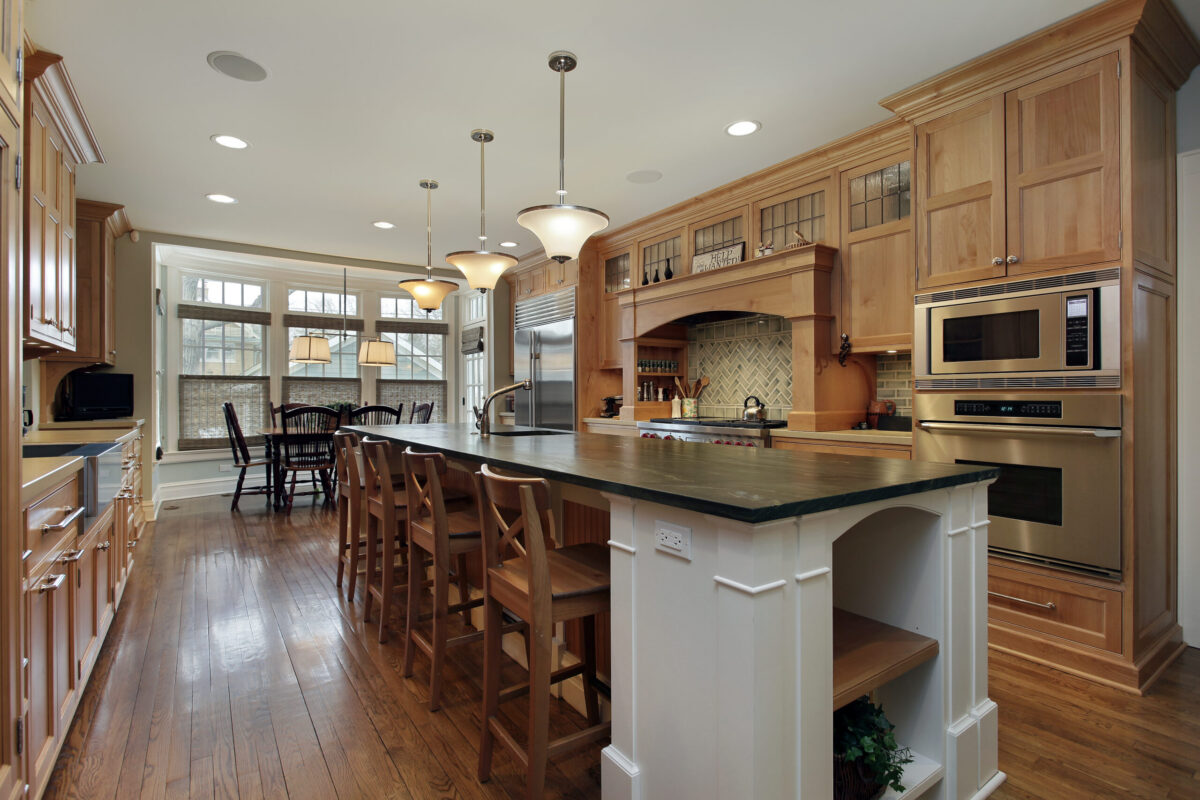
Bath & Kitchen Galleria takes the uncertainty, delays and frustration out of home renovation with a process built around planning, precision and customer satisfaction
Anyone who has ever lived through a home remodeling project probably has a story: The contractor who stopped returning calls. The tile that arrived three weeks late. The cabinet door that couldn’t fully open. The job that was supposed to take a month and somehow stretched into three.
John Hogan and Bobbie Kohm have a name for those stories: remodeling scar tissue.
And at Bath & Kitchen Galleria, they’ve built an entire business around making sure customers don’t collect any new ones. They believe the remodeling industry has long accepted a level of unpredictability that consumers wouldn’t tolerate almost anywhere else. Their solution isn’t a revolutionary new cabinet or exclusive countertop. It’s something far less glamorous — and arguably more valuable.
A process.
Their company brings designers, products, project management, logistics and installation under one roof, then puts considerable work into a project before demolition ever begins. The result, they say, is a remodeling experience designed to deliver quality work when promised, without forcing homeowners to coordinate a small army of contractors and suppliers themselves.
It is, in many ways, exactly what the company’s tagline promises: “The way remodeling should be.”

From Wall Street thinking to walls and tile
Hogan didn’t set out to become a remodeler.
A Long Island, New York, native, he attended Villanova University before coming to Atlanta to earn an MBA from Emory University. After earning the degree, he stayed. His career took him first to Ernst & Young, where he consulted with companies on executing high-growth strategies, then into venture capital, where he spent about a decade identifying businesses positioned for rapid expansion.
When the technology market cratered around 2000, Hogan shifted to real estate, financing and developing high-rise condominiums. He also developed townhome communities in Atlanta, Charlotte and Charleston.
There is a pattern there.
Hogan likes opportunity, particularly when he sees an industry ready for disruption. Around 2013, the general contracting company he owned began taking on smaller kitchen and bathroom projects, initially for friends and acquaintances. What he discovered surprised him.
The home improvement industry, particularly kitchen and bathroom remodeling, seemed almost tailor-made for the kind of process improvement he’d spent his career studying.
Consumers have become accustomed to near-instant access to products, sophisticated logistics and high levels of customer service in virtually every other corner of American life. Yet remodeling remained fragmented, unpredictable and dependent on homeowners finding the right combination of contractor, designer, plumber, electrician, tile setter and suppliers.
Hogan saw dysfunction. The businessman in him saw something else — opportunity.
Turning ‘battle scars’ into a business model
Talk to enough homeowners about remodeling, Hogan said, and eventually the stories emerge. Maybe a contractor disappeared after collecting money. Perhaps workmanship didn’t live up to expectations. Tile was crooked. Floors creaked. Cabinet doors collided. A refrigerator was installed in a space where its doors couldn’t fully open.
Some mistakes are irritating. Others are expensive. Hogan calls them remodeling scar tissue because the frustration can linger long after the contractor has left.

That’s particularly true for homeowners who have worked hard, built successful lives and don’t particularly enjoy recounting how a remodeling project got away from them. But when prospective customers arrive at Bath & Kitchen Galleria, Hogan wants to hear those stories. The question isn’t merely, ‘What kind of countertops do you like?’ It’s also, ‘What happened the last time?’
Understanding what customers fear gives his team a roadmap for creating a different experience. Where remodeling can sometimes feel improvised, Hogan’s approach is intentional. The company emphasizes detailed construction drawings, fixed pricing, clearly defined selections, professional design and established installation standards. Nothing is left to a conversation someone vaguely remembers having three months earlier.
Selections are documented. Placement is documented. Even details such as tile orientation, finish and the height of sconces can be specified before work begins. Homeowners review the plans and sign off on them, with Hogan’s team encouraging clients not to approve anything they don’t understand or agree with.
That front-end work takes time. Hogan considers it time well spent.
See it before you build it
One of remodeling’s crueler surprises can come near the end of a project. The tile looked beautiful in the tile store. The countertop was gorgeous at the stone supplier. The cabinets were perfect in the showroom. Then someone put them all together.
Bath & Kitchen Galleria is designed to remove some of that guesswork, and that’s where senior designer, Bobbie Kohm fits in. She joined the company to build their roughly 11,000-square-foot showroom that offers customers a broad selection of materials and fixtures. She manages all of the professional designers who help homeowners understand how individual design choices work together.

The showroom is among the largest in the Atlanta area, according to the company, and is intended to give customers a place to compare products and envision a finished space rather than piecing together selections from multiple stores.
Then technology takes over.
Designers measure and photograph the existing space and create detailed, full-color 3D renderings. Customers can see how a larger shower, different cabinetry, new tile, sconces, heated floors or a towel warmer will look before anyone picks up a hammer.
Don’t like the cabinet color? Change it. Wonder whether another countertop works better? Try it.
Hogan said some renderings are realistic enough that people mistake them for photographs. More importantly, they allow homeowners to make mistakes on a computer screen instead of discovering them after thousands of dollars in materials have been installed. That’s also helpful when two people share a house but not necessarily a design aesthetic.
Together, Hogan and Kohm joke that their team occasionally doubles as marriage counselors. The renderings can provide versions A, B and C, allowing couples to compare not only how different choices look, but what they cost. Then the designers can leave the room. Some negotiations, after all, don’t require a contractor.
Measure twice. Order everything. Then demolish.
Perhaps the clearest example of Hogan’s philosophy happens before construction starts. Bath & Kitchen Galleria orders the materials. All of them. Then the company’s logistics team receives them, checks them for damage and verifies that the products are correct.
Only after everything needed for the project has arrived does the project manager schedule demolition. The complete job package is delivered to the customer’s home around the start of construction.
It sounds almost painfully obvious. It also eliminates one of remodeling’s most familiar headaches: tearing apart a functioning kitchen or bathroom and then discovering the tile, faucet or other essential component isn’t available.
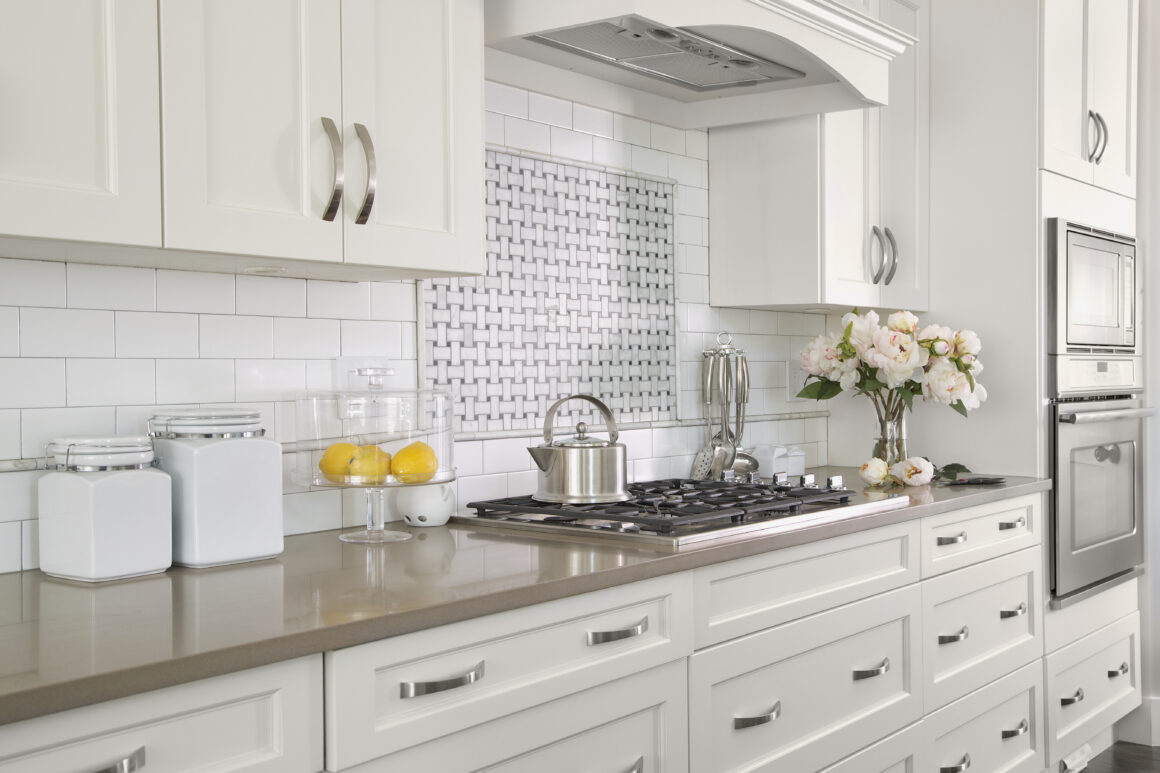
As a practiced cook might say, it’s mise en place for remodeling. You don’t start preparing the meal and then discover halfway through that someone needs to drive to the store for the butter. Everything is in its place first.
That same thinking extends to labor. Hogan doesn’t claim his installers physically lay tile better or hang cabinets faster than everyone else. They simply spend more of the workday working. If a crew discovers it needs drywall or a couple of two-by-fours, the installer doesn’t leave the job site, make a run to the home improvement store, grab lunch while he’s out and return hours later. Bath & Kitchen Galleria sends someone to bring the needed supplies.
“We don’t lay tile really any faster than anybody else,” Hogan said. “We don’t install a cabinet faster than anyone else.”
The difference is the system.
“We work a lot smarter.”
A date you can put on the calendar
For a homeowner, efficiency isn’t an abstract business concept. It’s the number of mornings without a working shower. It’s the number of dinners prepared without a kitchen. It’s the number of weeks workers are coming in and out of the house.
That’s why Hogan is particularly proud of his company’s scheduling.
“The day we start the project, we tell the homeowner the day we are going to finish,” he said. “And we never miss it.”

That confidence comes from all the preparation customers don’t necessarily see — CAD drawings, detailed specifications, product ordering, receiving, inspections and logistics. Hogan said the company can complete a kitchen in about four weeks compared with seven weeks for other remodelers he encounters.
The distinction, he insists, isn’t speed for speed’s sake. It’s predictability.
That’s the product Hogan is really selling.
One team, one place
The scale of Bath & Kitchen Galleria’s operation reflects that philosophy. Hogan said the company has nine employees handling functions including design, project management, accounting, shipping, receiving and logistics, along with 53 people working in the field. Since moving from a roughly 2,500-square-foot showroom in Roswell to its much larger location in Alpharetta, Hogan said the business has grown from about 40 projects annually to nearly 350.
Customers also aren’t restricted to a single level of remodeling. The company handles extensive renovations, but Hogan said it also works with homeowners who want a more economical transformation. Existing cabinets, for example, might be painted and paired with new hardware, countertops and backsplash rather than replaced.

Hogan and Kohm use the philosophy of “good, better and best” — offering options appropriate to different reasonable budgets rather than assuming every customer wants the most expensive solution. And although kitchens and bathrooms are central to the business, the company handles other interior renovations as well. The common denominator is that the homeowner isn’t responsible for assembling the pieces.
“What it comes down to is we make remodeling easy for homeowners because they’re dealing with one team, one company, one place where they get everything done,” Hogan said.
More than ‘sticks and bricks’
Spend enough time talking with Hogan and it becomes clear that he doesn’t view remodeling simply as replacing old things with prettier new things. He calls that “sticks and bricks.” A cabinet is a cabinet. Tile is tile.
The more interesting question is why someone wants to remodel in the first place. In many of the North Atlanta communities Bath & Kitchen Galleria serves, homes were built in the 1980s, ’90s and early 2000s. Their owners may now be at a different stage of life than when they bought them.
They may want to age in place. They may want a bathroom that’s warmer, safer and easier to navigate. They may want to remove the wall separating the kitchen from the family room. And sometimes that wall has very little to do with architecture.
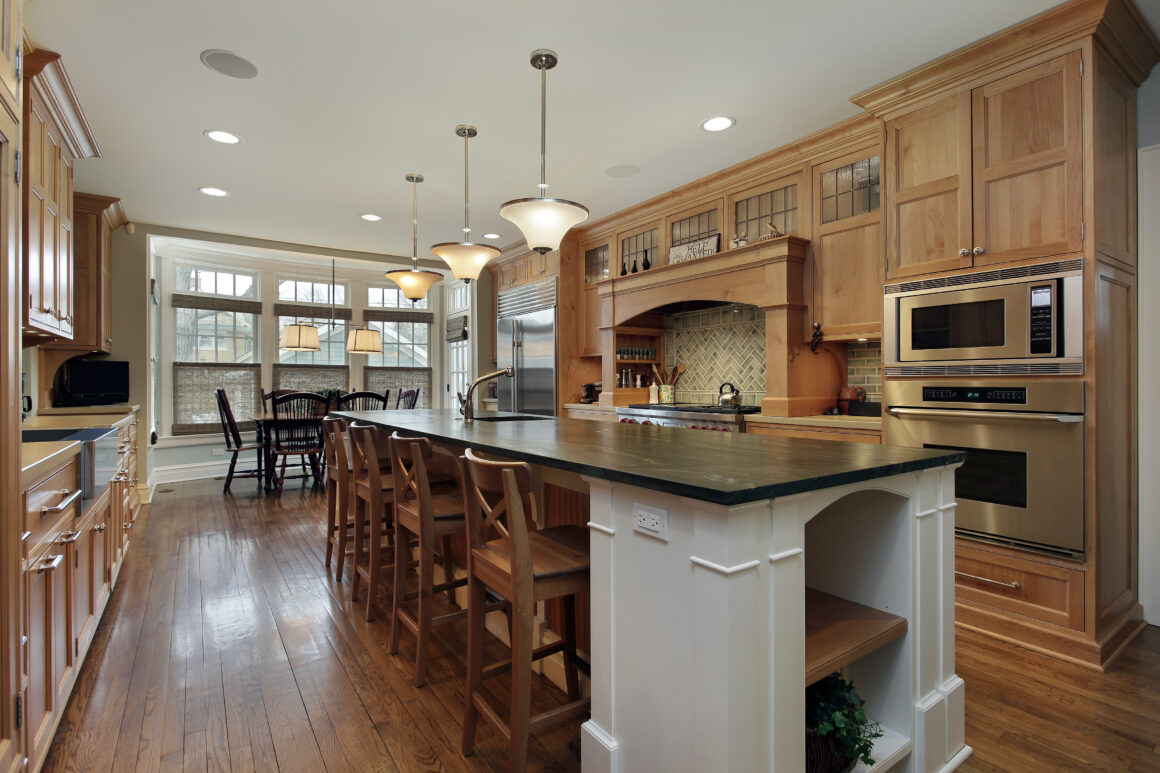
Hogan and Kohm talk about grandparents cooking in the kitchen while grandchildren play in the next room. In an older, compartmentalized floor plan, Grandma can’t see them. Open the space and suddenly she’s part of what is happening. Make the house easier for the entire family to gather in and perhaps Thanksgiving happens there.
The renovation hasn’t simply created a more modern kitchen. It has helped make that home the center of the family again. That’s the experience they want Bath &Kitchen Galleria to sell — not merely cabinetry, countertops and tile, but what those things allow people to do in the homes they’ve worked so hard to build. Because ultimately, homeowners aren’t buying a remodel.
They’re buying what comes after it. And they’ve spent years making sure the process of getting there doesn’t leave any more scar tissue.
To learn more about Bath & Kitchen Galleria, visit bathandkitchengalleria.com.